
Read an Ingham County Property Tax Record
Three systems hold the pieces. The local assessment roll, the current-tax account, and the county delinquent-tax system are separate. Each answers a different question. The Ingham County BS&A portal takes an address, name, or parcel number. It returns the property address, customer name, parcel key, roll-year values, and building summary. For the current bill, visit the taxing unit's own BS&A page. Once unpaid real-property taxes go delinquent, the county Treasurer becomes the office that matters.
| Field | What It Shows | Where |
|---|---|---|
| Assessed value | The local assessor's value, commonly one-half of true cash value after equalization | Assessment roll and BS&A |
| Taxable value | The value to which millage is applied, subject to Michigan's constitutional cap rules | Assessment roll |
| PRE status | Whether a principal residence exemption affects school operating tax | Local assessor record |
| Bill and payment status | Charges, payments, and the tax year attached to the parcel | Local treasurer, then county Treasurer if delinquent |
| Taxing units and millage | Jurisdictions and rates that make up the levy | Bill and county equalization reports |
Three figures answer three questions. Assessed value supports the public roll. Taxable value drives the levy. A deed's recorded consideration concerns a transfer. For a closer look at those numbers, the Ingham County property value guide walks through each one. The official sample BS&A assessment record shows how the fields line up for one Ingham parcel.
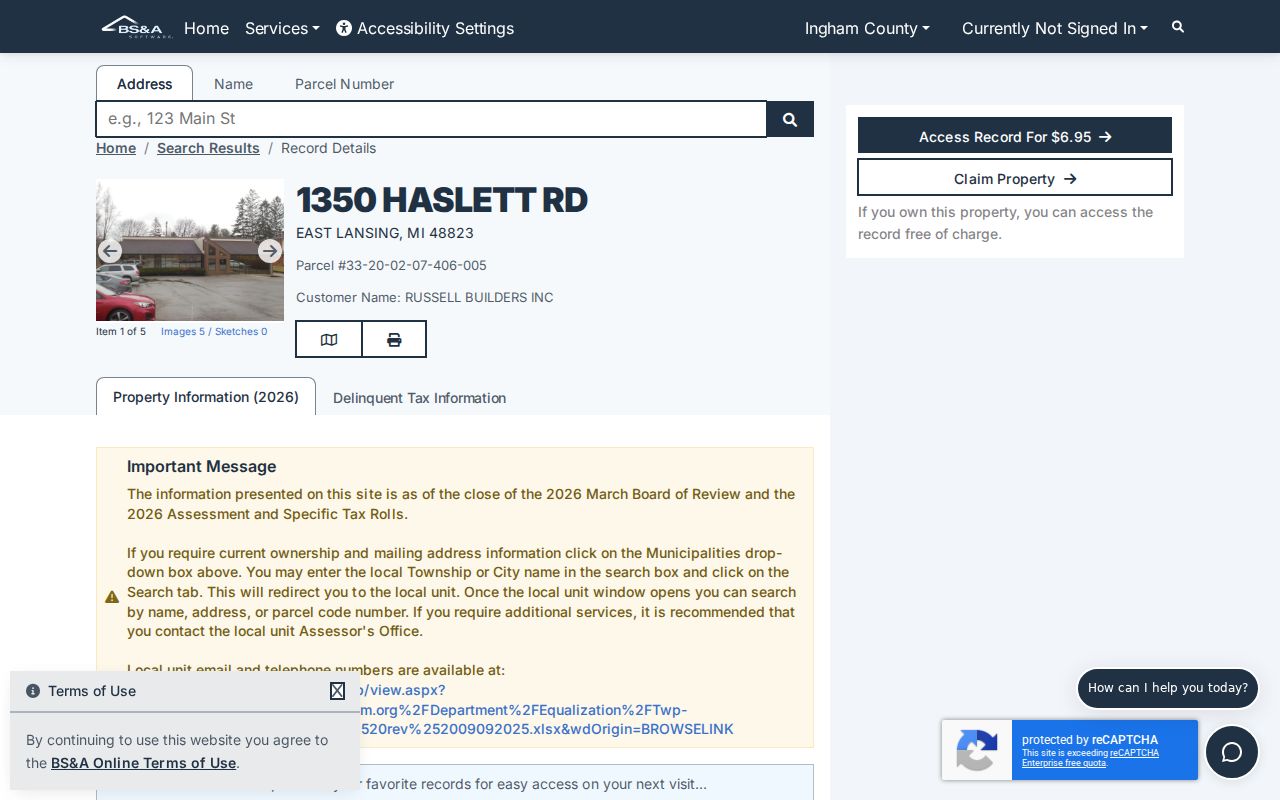
Note: the example shows one parcel's fields, not a countywide rate or a current value for any other property.
Search Ingham County Assessments in BS&A
The portal's home screen gives you three ways in. Address search works best when you know the street location. Name search relies on the owner label exactly as indexed. Parcel-number search is the cleanest route. It dodges both same-name collisions and address formatting quirks. Detail pages may be free for a claimed resident-owned property or fee-gated otherwise.
| Search key | Enter | Best use |
|---|---|---|
| Address | House number and street | Reach the parcel card from a known site |
| Name | Person or entity as indexed | Check parcels associated with a customer name |
| Parcel number | Full local parcel key | Match the precise tax account across systems |
The official BS&A search screen displays the Address, Name, and Parcel Number search routes side by side.
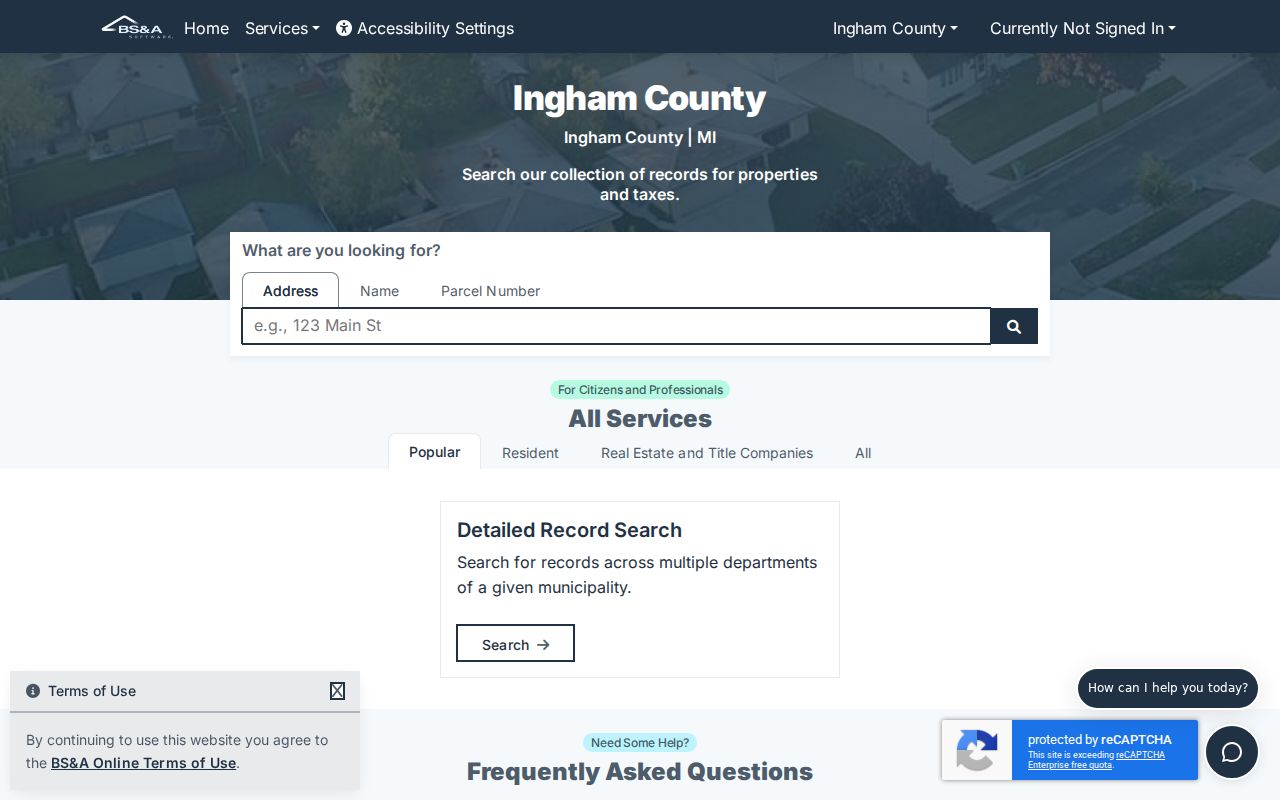
Carry the returned parcel key with you. Using it when you move between the assessment and tax systems keeps the same property in view the whole way.
How Ingham County Equalization Shapes Tax Values
The Equalization and Tax Mapping office reviews the rolls of 16 townships and five city assessors. It studies residential, commercial, industrial, agricultural, developmental, timber-cutover, and personal-property classes. The goal is for each class to average 50 percent of true cash value. That countywide job gives Equalization no power over one owner's assessment. Individual corrections start with the local assessor and the Board of Review.
Annual reports help place a parcel in context. The county's reports and millage index publishes links covering 2025 back through 2000. The reports support comparisons across years and jurisdictions, but they are not a parcel appraisal. The index page lists the full annual sequence. That keeps it useful even when a portal result feels thin.
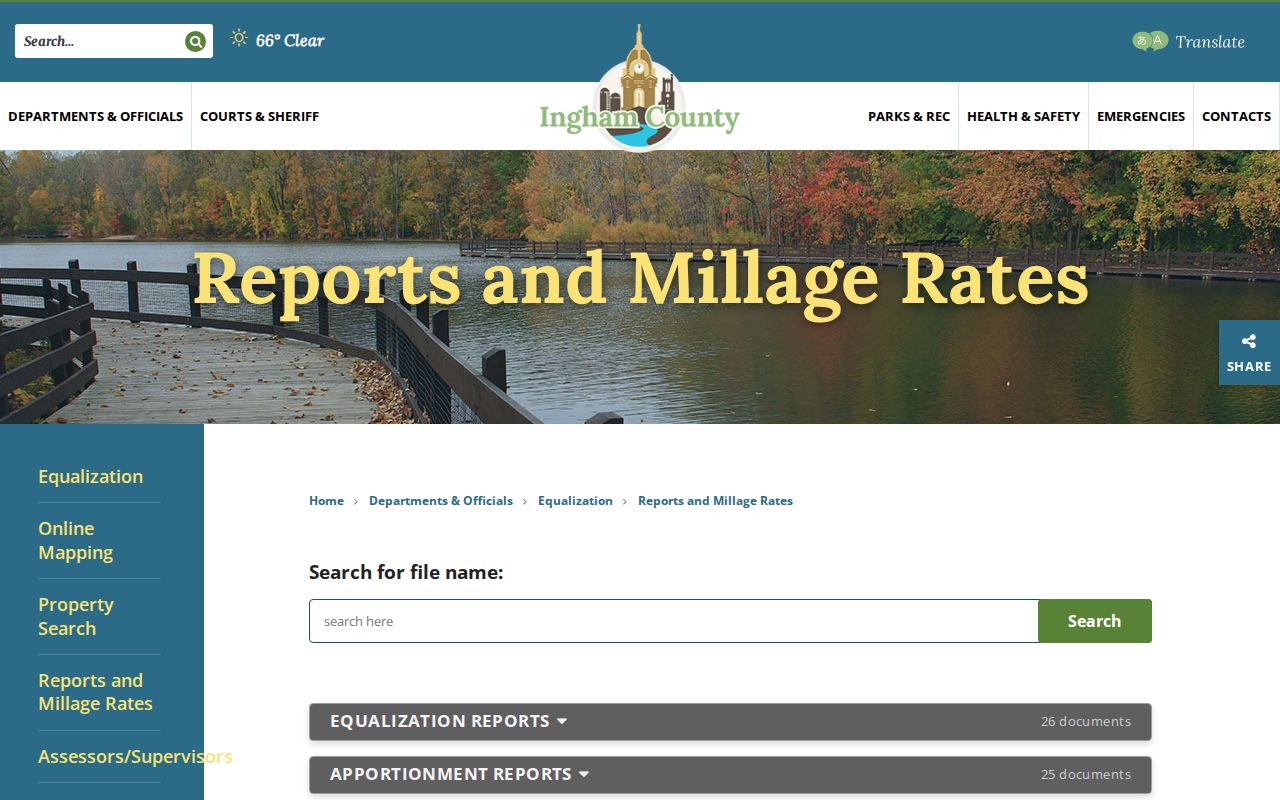
Keep the relevant year's report beside the assessment card and the bill. Note whether each figure describes one parcel or a whole class. That habit keeps countywide numbers and parcel numbers from blurring together.
Note: county equalization explains class-wide treatment. Only the local assessing unit and its review process can change an individual parcel assessment.
Ingham County Taxable Value Under Proposal A
Michigan keeps state equalized value and taxable value apart. Under the General Property Tax Act transfer rules, taxable value stays capped year to year until a statutory transfer of ownership. The transfer can uncap it the following year. Then the cap returns. That cycle explains why neighboring homes with similar assessed values can carry very different taxable values.
- Assessed value
- The assessor's estimate placed on the roll before equalization.
- State equalized value
- The assessed value after county and state equalization; Michigan generally targets 50 percent of true cash value.
- Taxable value
- The figure used with millage to calculate tax, subject to cap and transfer rules.
- Millage
- Tax per thousand dollars of taxable value, divided among the jurisdictions on the bill.
A sale price does not automatically become the next assessed value. Nor does an assessment change prove a sale occurred. Treat the deed, the assessment year, and the transfer rules as separate evidence.
Principal Residence Exemption Records in Ingham County
Michigan's Principal Residence Exemption goes by the name PRE. It affects the school operating portion of property tax for a qualifying principal residence. Form 2368 and state PRE guidance request the property tax identification number. They also ask for the local unit, county, owner, occupancy facts, and certification. The filing deadlines are June 1 and November 1 for the relevant tax year.
A PRE notation can support an occupancy question. It does not prove who holds title or who was present on a given date. Changes in ownership or use may call for a rescission or a new affidavit. The county Treasurer also cautions that amounts tied to a PRE denial may not show in its online delinquent balance. So confirm any denial-affected payoff directly with the office.
Read the flag narrowly. PRE status changes tax treatment; it is not a deed, a title opinion, or conclusive proof of a person's residence.
Follow an Ingham County Tax Bill
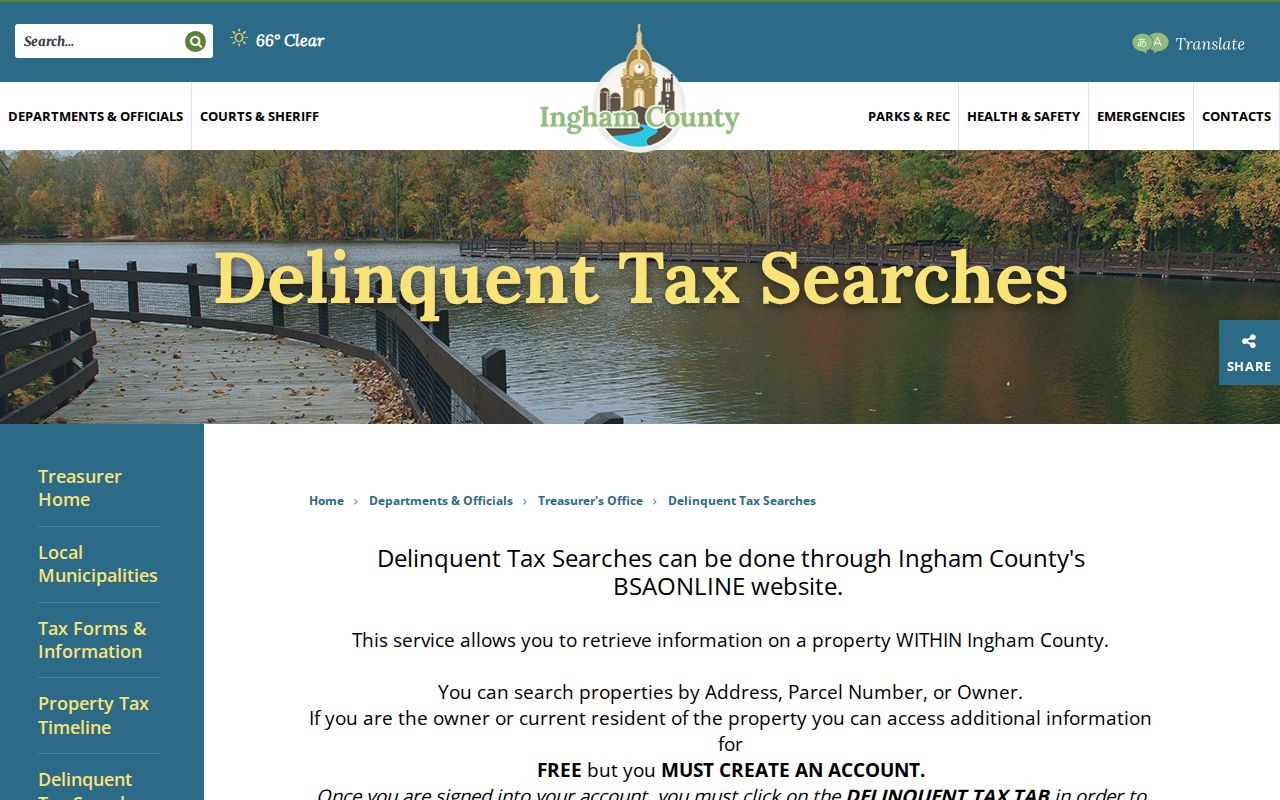
Current and delinquent taxes have different keepers. Start with the property's city or township for the current levy. If the bill has gone delinquent, turn to the Ingham County Treasurer delinquent-tax page. It points searches to BS&A by address, parcel number, or owner. Owners or current residents may claim an account for more information at no charge, while non-owner or non-resident access is advertised at $6 per pay-per-hit.
- Find the assessment card by address and copy the full parcel number.
- Check the city or township's current-tax service for the bill year and payments.
- For returned taxes, search the county delinquent system with that same parcel number.
- Compare PRE status and taxable value on the roll, then call the Treasurer at 517-676-7220 for a payoff or PRE-denial amount that may be absent online.
- Levy
- The tax produced by applying the listed millage to taxable value.
- Delinquent tax
- An unpaid real-property tax returned to the county Treasurer after the local collection period.
- PRE
- Michigan's principal-residence school operating tax exemption.
- Tax lien
- The statutory claim tied to unpaid property tax, distinct from a mortgage lien.
The Treasurer's delinquent-tax page itself states the account-claim option and the $6 pay-per-hit condition for other users.
A second option is the GovPros form, built around payments rather than a full assessment roll. It asks for a search type, your criteria, the parcel, the tax year, an amount, a quantity, and billing contact details.
For paying an Ingham County tax bill directly, the official GovPros payment route handles the transaction online.
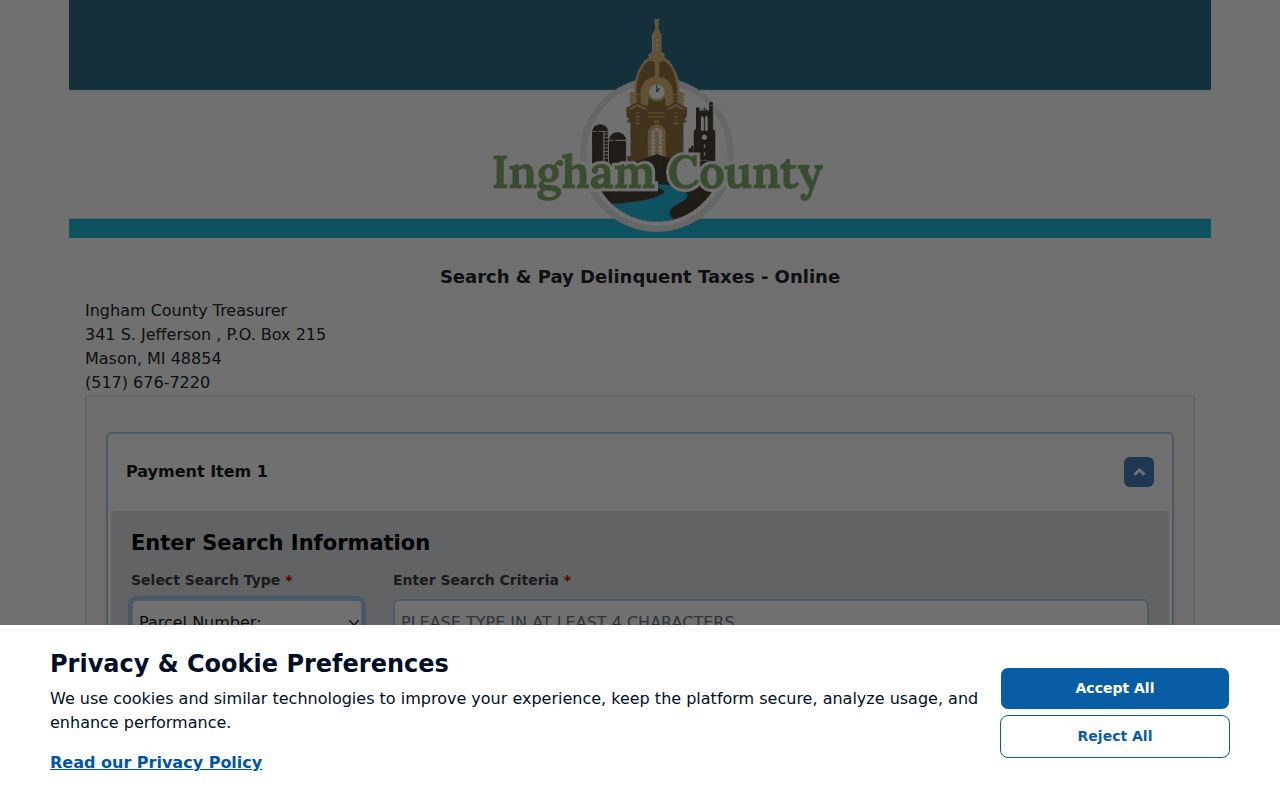
Confirm the parcel number and tax year first. Use the payment form only after that groundwork, never as the place to interpret an assessed or taxable value.
Delinquency and Ingham County Tax Foreclosure
A delinquent-tax question rarely stays small. It can grow into a full foreclosure chain. County Treasurer records show delinquency and the administration of tax foreclosures in Ingham County. A later transfer of the parcel may then surface in Register of Deeds deed records. A court file matters only where a judicial dispute exists. A redemption problem, quiet-title claim, or related case counts too. Michigan relies on statutory tax-foreclosure procedures, so treat no single portal as the complete history.
Preserve the parcel number, tax year, payment status, every notice, and any recorded transfer reference. If the online amount will anchor a payoff, ask the Treasurer to confirm it directly. That step matters most with a PRE denial. Another adjustment may not have reached the tax roll yet.
Note: A payment form proves what was submitted, but only the responsible office can confirm a complete payoff and cleared status.
Contest an Ingham County Assessment Locally
The city or township assessor is the first decision maker for an individual assessment. Ingham County Equalization does not fill that role. Start there. Compare the notice against the parcel card. Verify the classification and the physical facts on record. Gather sales or appraisal evidence that fits the valuation date, then follow the local Board of Review schedule. A PRE denial runs on its own notice and appeal track. State guidance allows a 35-day Michigan Tax Tribunal appeal period after a denial.
Protect the deadline. Ingham County has several local assessing units, so use the date and instructions on the unit's notice; a county report cannot substitute for a timely local filing.
Evidence should speak to the assessed parcel and the applicable valuation date. A tax bill, a sale price, or a GIS estimate alone may not settle condition, classification, exemptions, or the assessment ratio. Keep proof of filing and the board's written result in case a further appeal follows.