
Build an Ingham County Deed Chain Backward
Start with the current recorded deed. Turn each grantor into a new grantee search for the transfer just before it. The table below is a working timeline, not a claim about any specific property, so fill one row per verified conveyance. Keep the legal description in view.
| Transfer Date | Grantor to Grantee | Deed Type | Book/Page or Instrument |
|---|---|---|---|
| Newest verified date | Prior owner to current grantee | Warranty, quitclaim, representative, or other deed | Copy the exact recorder reference |
| Next earlier date | Earlier grantor to that prior owner | Record the actual type | Match legal description and reference |
| Next earlier date | Repeat one link at a time | Do not infer a missing conveyance | Use deed book when online coverage ends |
| Gap or unresolved period | State the names searched | Check probate, plat, and spelling variants | Preserve the negative search and date |
Coverage has hard edges in Ingham County. The Register of Deeds index begins in 1956. Online images start in 1960. The county warns that indexing from 1956 through 1981 can contain conversion discrepancies, so for older former owners plan an in-person vault search rather than pushing the online portal past its stated coverage.
Know the Ingham County Online Cutoffs
The official records-online page sets the boundaries plainly. Indexed data runs from 1956 to the current effective date, while images reach back only to 1960. A conversion warning covers the 1956 through 1981 index, and 1982 forward is described as the proven-accurate era. Direct Search also skips the newest seven days.
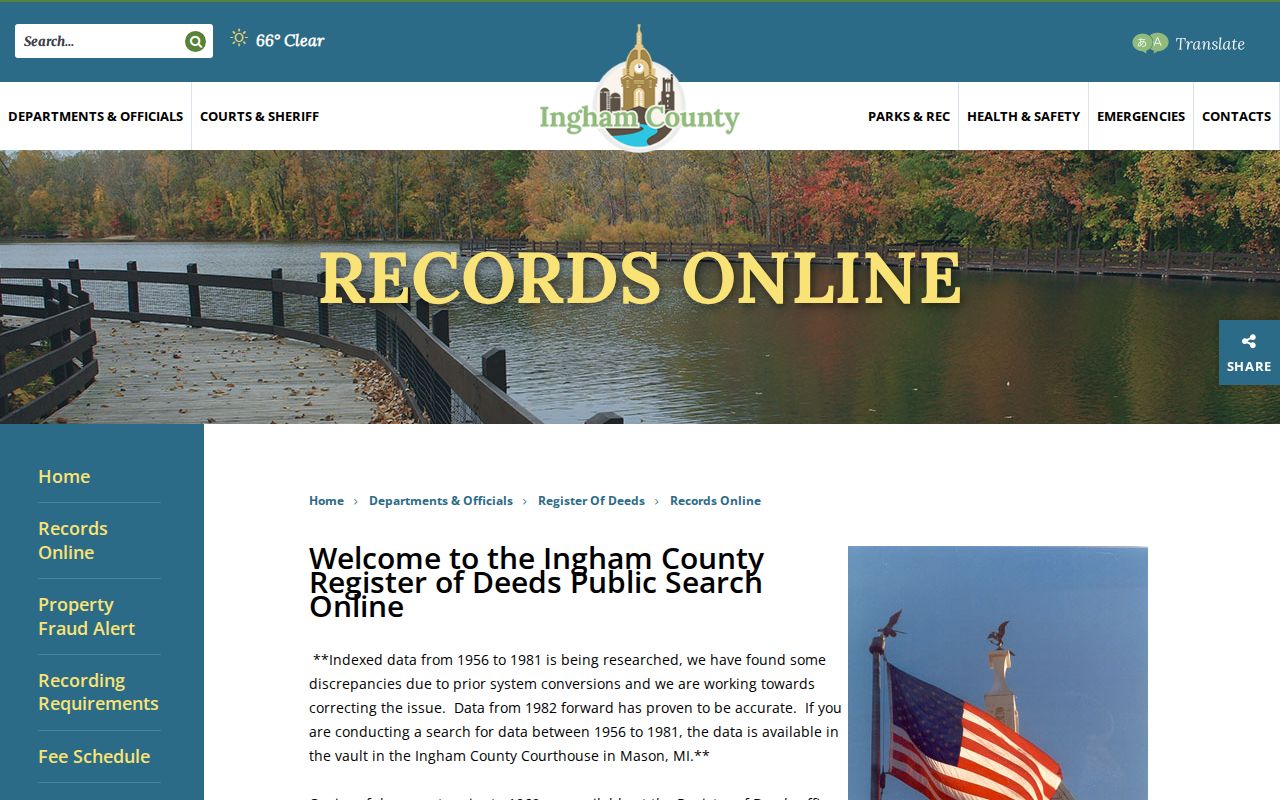
Write the cutoff beside your last online link. An empty result before 1982 may reflect shaky indexing rather than a missing deed.
Online limit. The index begins in 1956 and images in 1960; pre-1960 research requires a Mason vault appointment.
Continue Prior Ingham Owners in the Mason Vault
The Register of Deeds sits at 341 South Jefferson Street, second floor, Mason, with mail to PO Box 195, Mason, Michigan 48854. Public hours are 8 to 5 on weekdays. Vault hours are 8:30 a.m. to 4 p.m. Public computers are available. Records before 1960 require an appointment. Bring every last-known reference: grantor, grantee, date range, deed type, liber/page or instrument, legal description, and subdivision. The office sells recorded copies at $1 per page. Certified copies cost $5 per document plus $1 per page under the posted fee schedule. This page follows chains; the separate deed page covers copy mechanics in depth.
Follow the Ingham Legal Description, Not Just an Address
An address is the weakest link in an old Ingham County search. Street numbers change. Parcels split and combine. The legal description holds the chain together far better. Lot and block, subdivision name, and deed references anchor each transfer. Search spelling variants and initials. Require the land description to match before adding a name to the chain.
Lansing changed its street-number system in 1906. The 1913 Sanborn maps show old and new numbers side by side. City directories can translate an address across the years. That is why a modern-address search may seem to lose former owners.
- Grantor
- The party conveying the interest described in a deed.
- Grantee
- The party receiving that interest.
- Chain of title
- The ordered series of instruments affecting the same land.
- Reverse index
- An index used to search grantors when tracing backward.
- Quitclaim deed
- A conveyance of whatever interest the grantor holds, without the warranties of a warranty deed.
Place Former Ingham Owners in Historic Tax Ledgers
The Capital Area District Libraries collections hold older Ingham tax history. Lansing property and tax ledgers cover 1894 through 1939. Broader Ingham material runs from 1907 through 1939, alongside assessment photographs and planning resources. A ledger can place a name beside an address or parcel-era description. That helps when no modern tax bill exists.
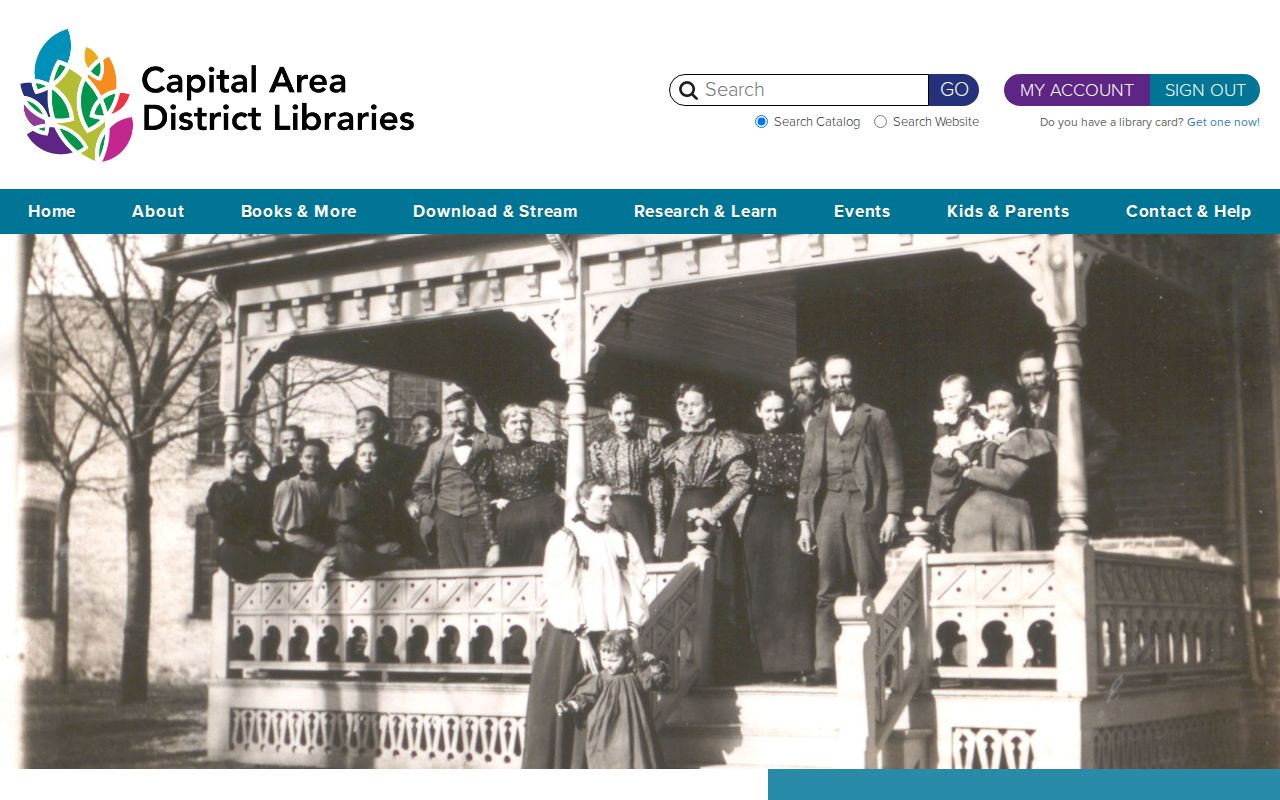
Treat a ledger as corroboration, not a deed. Cite its year and page, then let the recorder chain establish the actual conveyance.
Translate Past Ingham Owners Through Directories
CADL's house-history holdings go well beyond directories. Lansing permits run from 1930 through 1968. Construction permits span 1923 through 1992. The collection also holds about 17,000 assessor photographs taken roughly 1960 through 1980, plus aerial series, Sanborn maps, and the 1952 through 1970 Belon Real Estate Collection. Directory entries show who was listed at an address. They also reveal how a structure changed. Search adjacent directory years because publication dates and moves rarely align with deed recording. A directory may list an occupant rather than the owner, so compare the name with tax ledgers and deeds before calling anyone a former owner. Note: Historic address evidence fills context between deeds, but it should never be silently substituted for a missing conveyance.
Bridge an Ingham County Death Transfer
A clean sale-to-sale chain breaks when title passes through an estate, trust, survivor, or court authority. Ingham Probate Court preserves wills, estates, trusts, guardianships, and conservatorships. The Probate Register's Office holds the public records. Requests can be made in person, by mail, fax, phone, or email. The FamilySearch Ingham probate catalog describes indexes from 1835 through 1933 and records from 1840 through 1904, subject to collection access and coverage. Older transfers often hide there.
Use probate to identify the representative or heirs. Then return to the recorded deed or death-related instrument that actually moved the land.
Separate Former Owners from Prior Lenders
Deed books in Ingham County hold more than transfers. Mortgages, assignments, discharges, liens, and releases all name people too. A borrower shows up as a mortgagor. A lender or assignee only holds a security interest in the parcel. Neither belongs in the chain of title. So track encumbrances on a separate trail and keep a bank or lien claimant out of the ownership line.
When a mortgage actually matters, follow the original instrument through its assignments. Then look for the final discharge or release. Match the parcel number and legal description rather than a shared surname alone. Plats need their own research column as well. A subdivision plat explains the lot and block that later deeds cite. Yet the subdivider named on it was not automatically every lot owner after that. Proposed and final plats differ, too. Anchor the geometry with the recorded final plat. Then keep walking the grantor-grantee chain for the parcel itself.
File deeds, liens, plats, assessment entries, and directory listings in separate source categories. Their dates can support one shared history. They simply never carry the same legal meaning.
Walk the Ingham County Chain One Owner at a Time
The free Direct Search gives you index references, while Tapestry or office copies supply the deed images. Only after the newest deed matches the subject legal land should you begin working backward through Ingham County property records.
- Find the current acquisition deed with the present owner as grantee.
- Read its grantor, recording date, deed type, reference, and legal description.
- Search that grantor as a grantee to locate the prior acquisition of the same land.
- Repeat, then move to deed books and vault access when online coverage ends.
- Book and page
- A traditional recorder citation for a deed-book entry.
- Instrument number
- A modern unique filing reference.
- Legal description
- The land identity used to prevent a same-name or same-address mistake.
State the Limit of an Ingham County Owner Chain
The online system does not mark the start of land history in Ingham County. Its deed index only reaches back to 1956. Before that, ownership must be rebuilt from other sources. Vault deed books, plats, tax records, probate files, maps, and archival collections fill the gap. FamilySearch and similar catalogs help with discovery. Inclusion in a broad Michigan collection never guarantees that every instrument has been digitized.
Lawful use. Trace Ingham County former owners for house history, estate work, title research, or property diligence. Never use the trail to stalk, harass, or harm a living person.
A defensible stopping point names the last verified deed. Note the repositories checked, the name and description variants tried, and any gap left unresolved. That is more honest than inventing an owner just to make the Ingham County timeline look complete.
Keep a research log. Record every failed name variant and book reference. A later vault search can then resume at the precise gap instead of repeating the whole history, and an online no-match in the property records never counts as proof.